Santiago de Compostela, the capital of Galicia, is an impressive historic city and important pilgrimage site with Romanesque and Gothic architecture. It's a beautiful place to spend a few days, and this guide to things to do in Santiago de Compostela will help you make the most of your time there.

When we traveled to Spain to visit my in-laws in Santander, we took advantage of the opportunity to travel around Northern Spain. My husband and I left our daughter with his parents for a few days and we headed to Santiago de Compostela and Casa Beatnik.
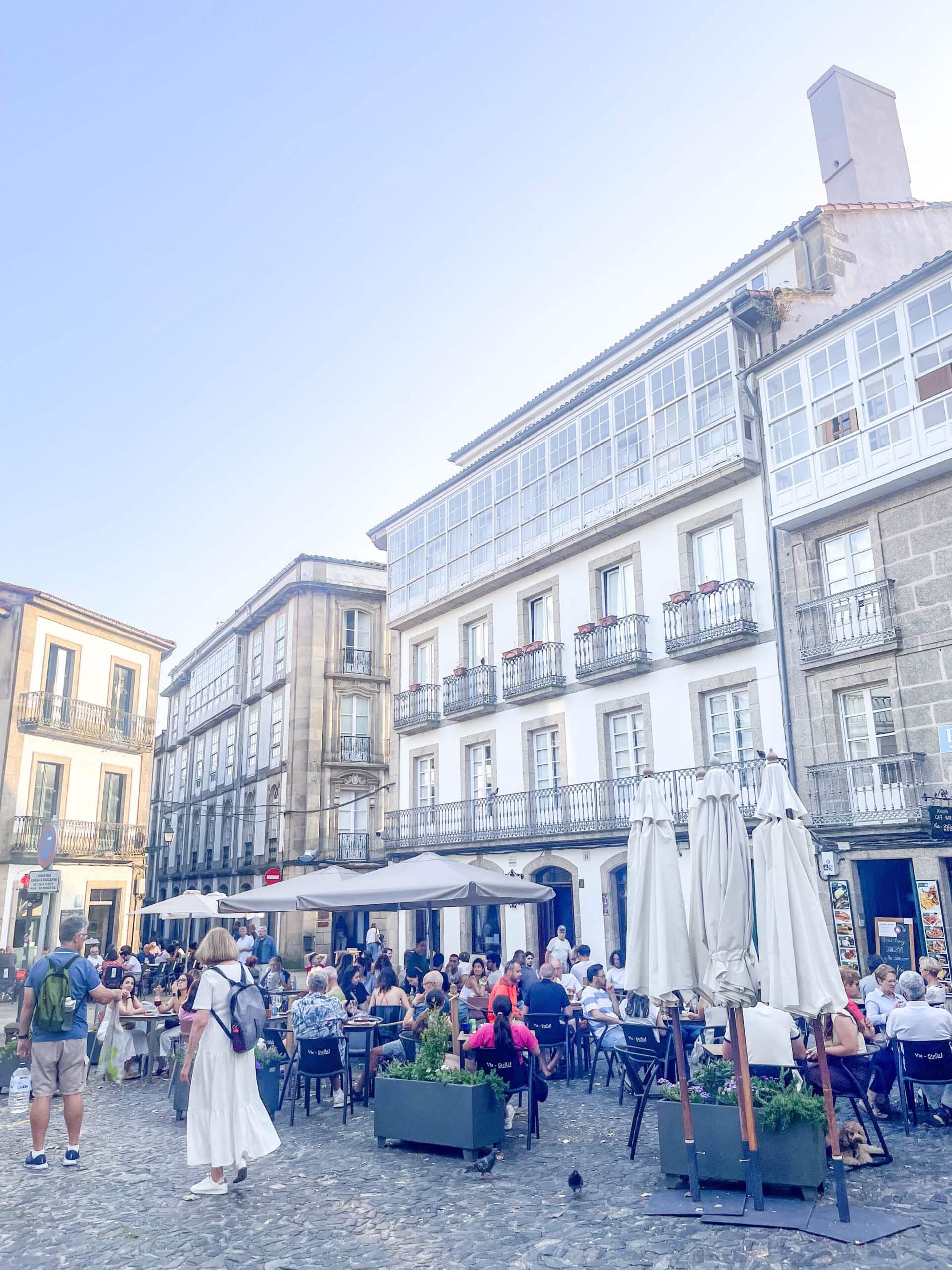
About Santiago de Compostela
There are two sections to the city: the new town and the old town. The old town is the historic city center, which is closed to traffic, and is very popular with tourists.
If you are visiting in June, expect super late sunsets. The sun didn't go down until 10:30!
Camino de Santiago de Compostela
The "Camino" is a famous pilgrimage route that ends in Santiago de Compostela. ("Camino" translates to "path", "route", and "I walk"). In English, it's called the Way of St. James. The pilgrimage route is referred to as the "Camino de Santiago de Compostela", "Camino de Santiago", or simply just the "Camino".
According to legend, St. James' remains were transported from Jerusalem to Northern Spain by boat, but were lost. The remains were missing for eight hundred years until a bright star led a shepherd to the burial site in Santiago de Compostela. Upon rediscovery of St. James' remains, a cathedral was built on the spot where the remains were found, and the Camino was established. The Camino became one of the most important Christian pilgrimage routes during the Middle Ages.
Cities along the Camino benefited from the large number of pilgrims traveling through. These cities became cultural and economic centers, and still see hundreds of thousands of tourists each year.
The Camino isn't one route, but rather a network of dozens of paths that pilgrims can take leading to the shrine of St. James at the Cathedral of Santiago de Compostela. The Northern Route links Santander, Santillana del Mar, and Santiago de Compostela. Other routes begin in Portugal and France. Depending on the route, it can take days, weeks, or months to travel the Camino on foot, by bicycle, or on horseback.
Today, the Camino Francés is the most popular route. This route begins in France, near the border with Spain, and takes approximately 30 days to complete. Pilgrims hiking the Camino stay at dormitories and hostels along the way. They purchase a credencial, or pilgrim's passport, which gives them access to overnight accommodations along the route. The credencial gets stamped at each town and is shown in Santiago de Compostela to receive a compostela (a certificate that the Camino was completed).
I'll admit that as an American, I had never heard of the Camino. But, my Spanish mother-in-law explained its importance. She's completed one of the routes and plans to do it again. According to her, you have the option of doing the Camino when it is rainy or when it is hot.
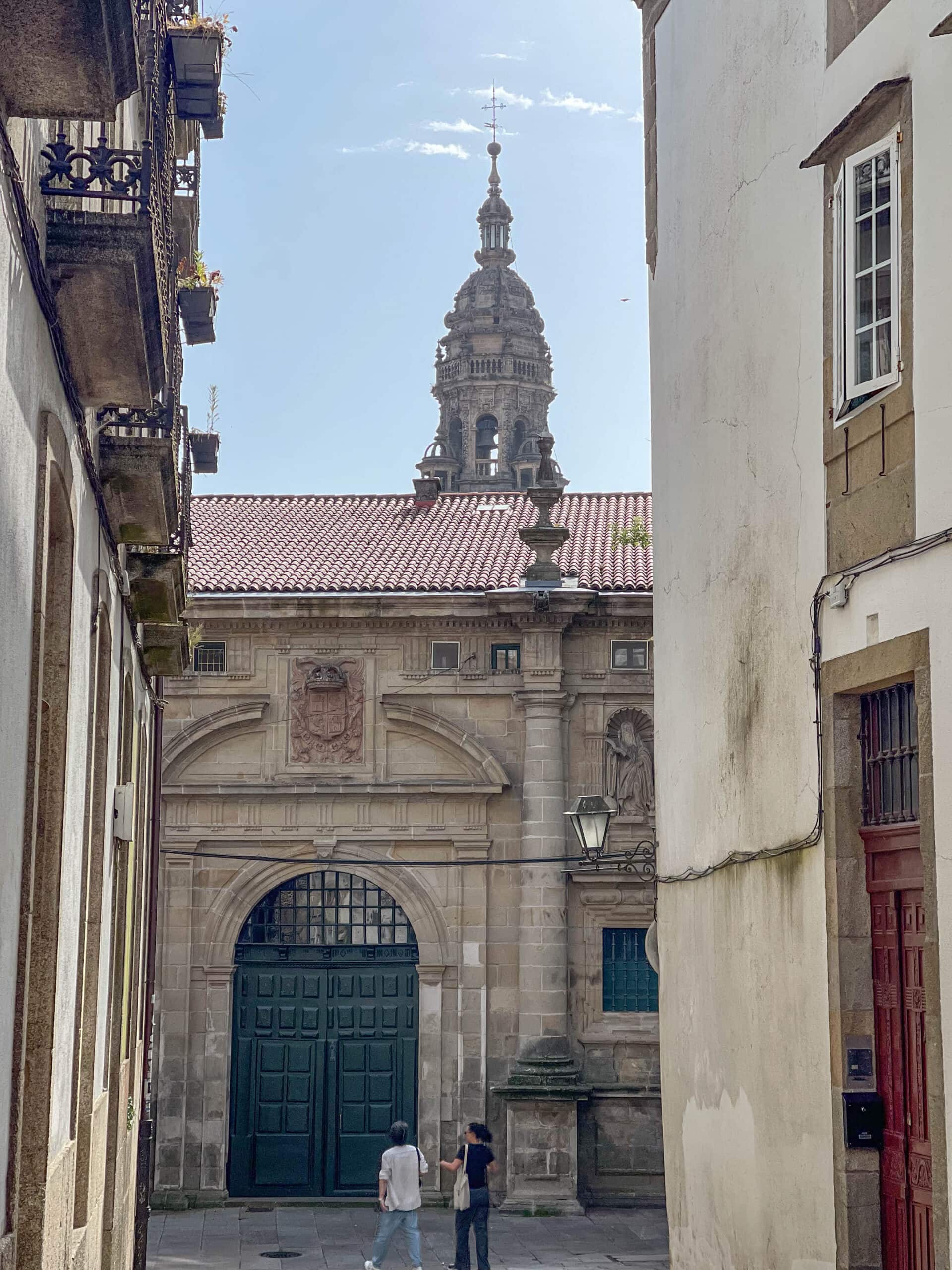
Where is Santiago de Compostela?
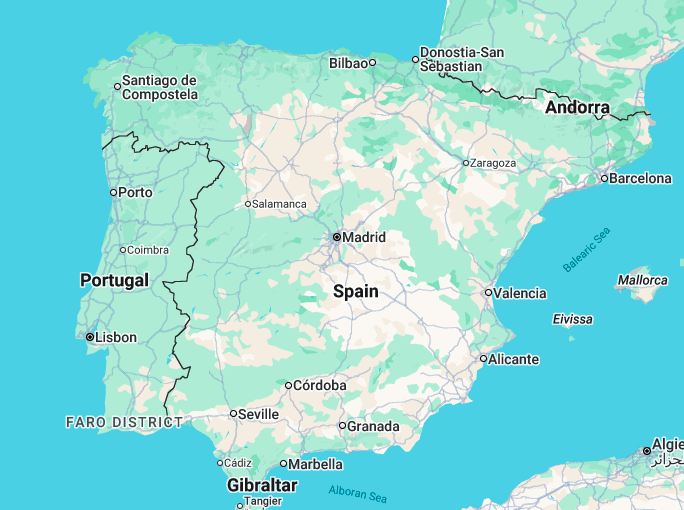
Santiago de Compostela is located in Spain's Galicia region, the northwesternmost region of Spain. It's above Portugal, and about an hour from Spain's west and north coasts.
Getting to Santiago de Compostela
Santiago de Compostela is a 2.5-hour drive north of Porto, Portugal, and a 5-hour drive from Santander. It's a 3.5-hour train ride from Madrid.
Note: If planning to drive from Portugal, make sure it is ok to cross international borders in a rental car. There can be restrictions.
This historic city center is closed to traffic, but we were able to find a parking lot nearby.
Things to Do in Santiago de Compostela
Santiago de Compostela's Old Town is a UNESCO World Heritage Site with a variety of sites to explore, including a lively market, an incredible cathedral, a charming park, and lots of restaurants and cafes.
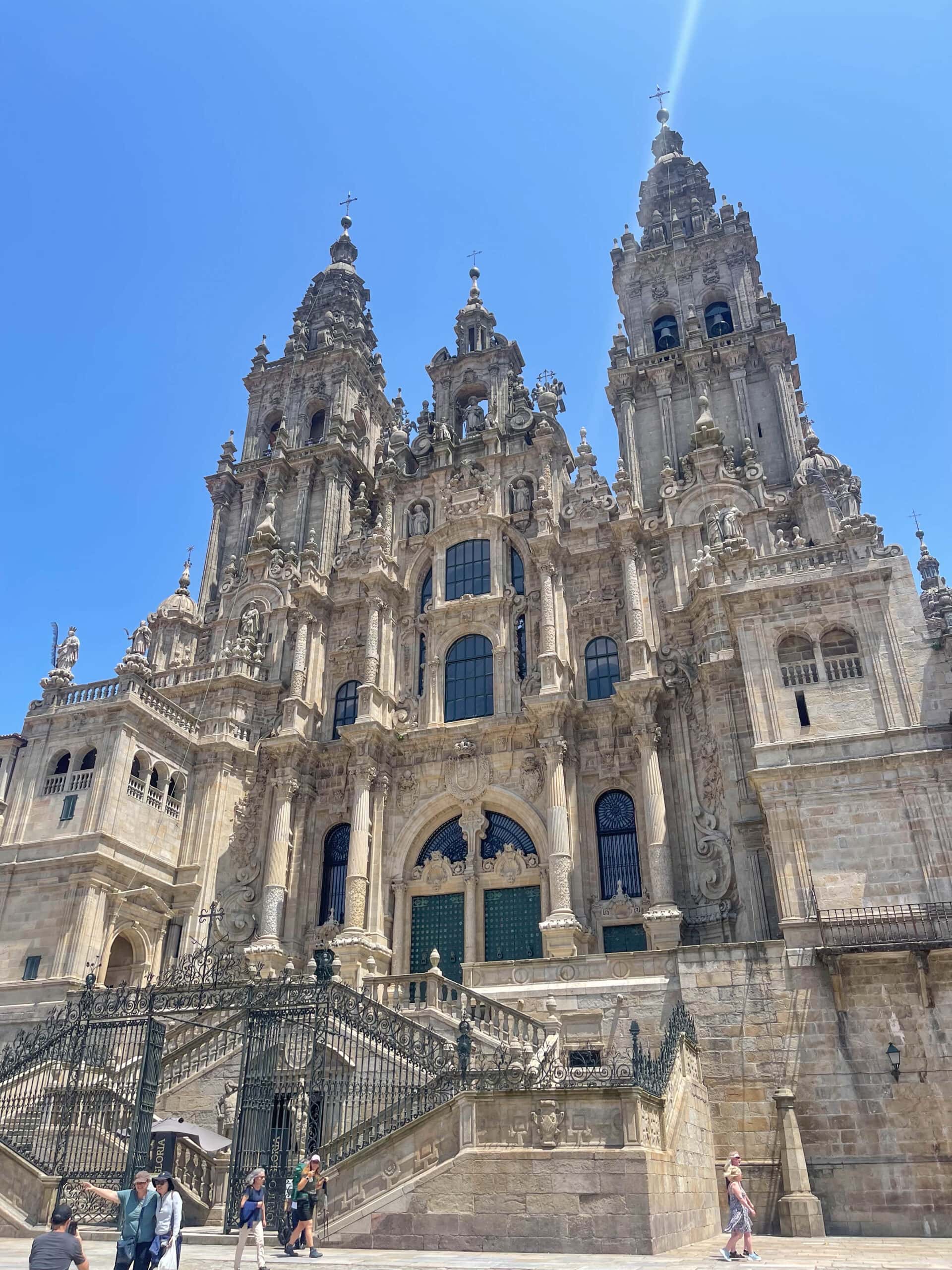
Cathedral of Santiago de Compostela
Formally known as the Cathedral of Santiago Apóstol, this cathedral was built on the site where the remains of St. James were rediscovered in AD 814, and it is the endpoint of the Camino de Santiago. In 997, the church was destroyed by fire during the conflict with the commander of Córdoba (which was under Moorish rule). While the fire destroyed the church, the tomb and relics of St. James were unharmed.
The present-day cathedral was built in 1075 in the Romanesque style using granite. Later additions to the structure are in the Gothic and Baroque styles.
The cathedral hosts a pilgrims' Mass at the main altar four times a day, at 7:30 am, 9:30 am, noon, and 7:30 pm. Additionally, there is an English-language Mass at 10:30 am every day at the Pilgrim's Office Chapel.
A variety of tours are available, and the cathedral's museum is open daily from 10 am until 8 pm. It is free to enter the cathedral, but tickets are needed for some areas. For the best view of the city, go on a tour of the cathedral's roofs.
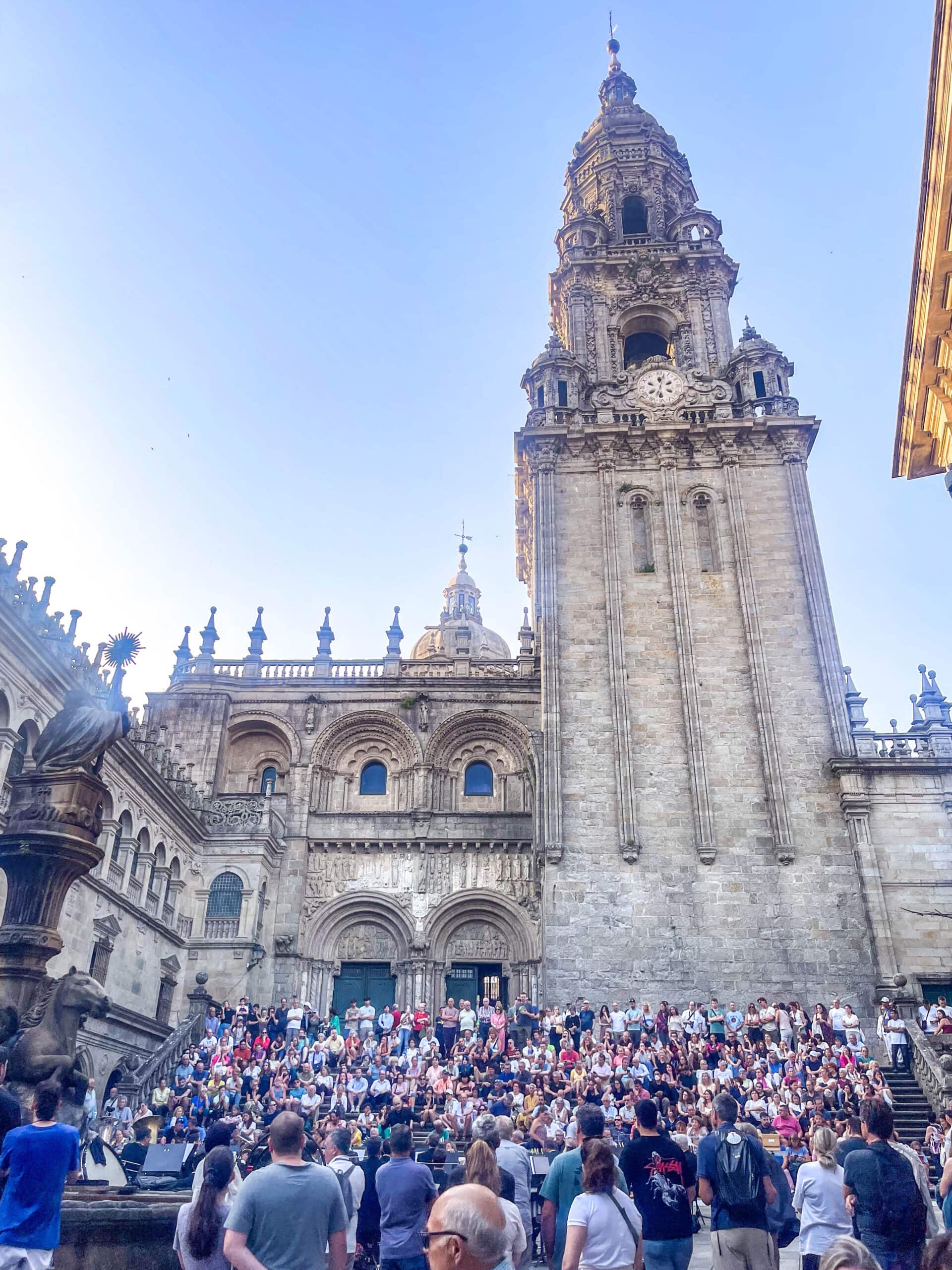
Plaza da Quintana Free Concerts
Free concerts, dance shows, and theatre performances are often hosted at this large plaza in the historic old town near the cathedral. One night, we finished dinner and found a full orchestra performing to a large crowd.
Note that the Galician spelling is Praza da Quintana.
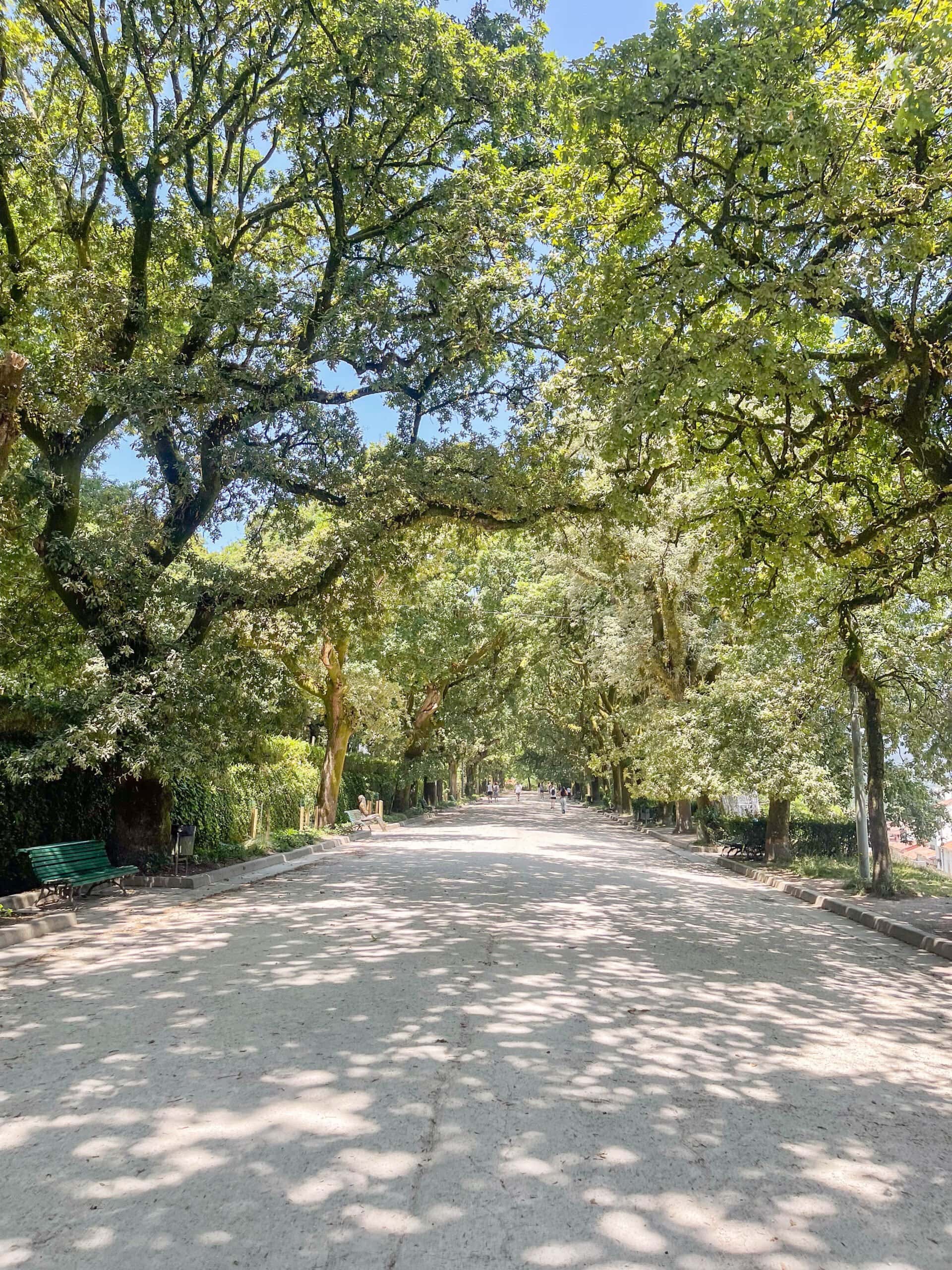
Alameda Park
This large park is just a short walk from the old town, and offers wonderful views of the cathedral towering over the old town. It was quite hot when we visited Santiago de Compostela, and we loved this cool shady park.
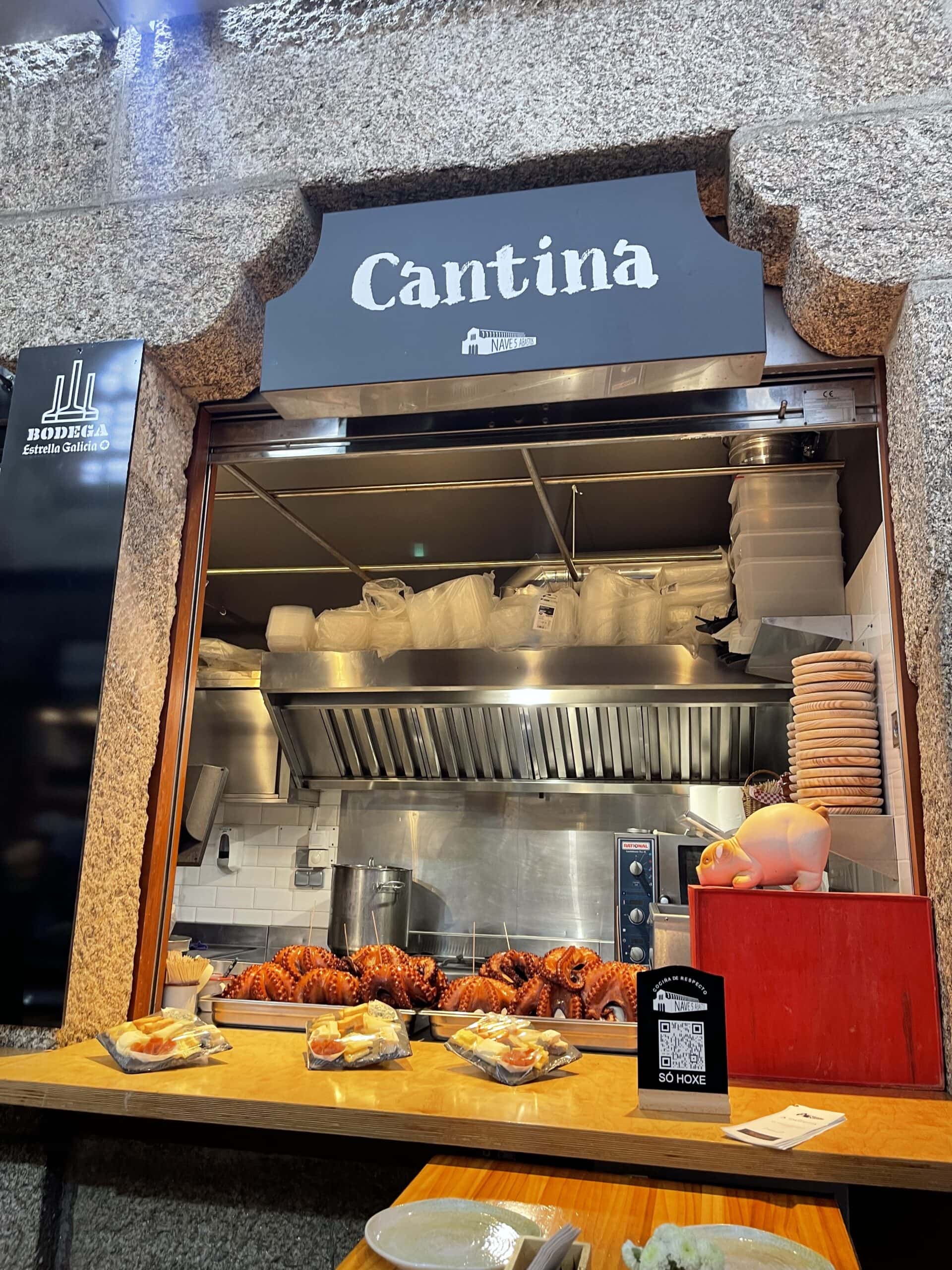
Mercado de Abastos
Santiago de Compostela's central market is a place to explore local Galician cuisine and culture. The market is a place for locals to buy meat, seafood, and produce, as well as a place for visitors to try prepared foods. This is the perfect place to try traditional dishes like grilled octopus, padrón peppers, cheese, cured meats, empanadas, fish stew, calamari, and almond cake.
The market is open from 7 am until 4 pm Monday through Saturday and is closed on Sundays.
Restaurants in Santiago de Compostela
It's best to make a reservation for meals, as the city can be crowded with tourists. Many restaurants are closed from 4:30 pm until 8 pm. The Spanish tend to eat a later lunch, around 2 pm, and eat dinner closer to 9 pm.
A Taberna de Bispo
We enjoyed the authentic regional cuisine, kind service, and lively atmosphere of this restaurant in the heart of historic Santiago de Compostela. A variety of pinchos are on display at the long bar at the front of the restaurant. You will find grilled seafood (including local specialities like razor clams), local cheeses, cured meats, plus classic pinchos and tapas. We snacked on a Spanish omelet, grilled octopus, manchego cheese, patatas bravas, and their version of crème brûlée.
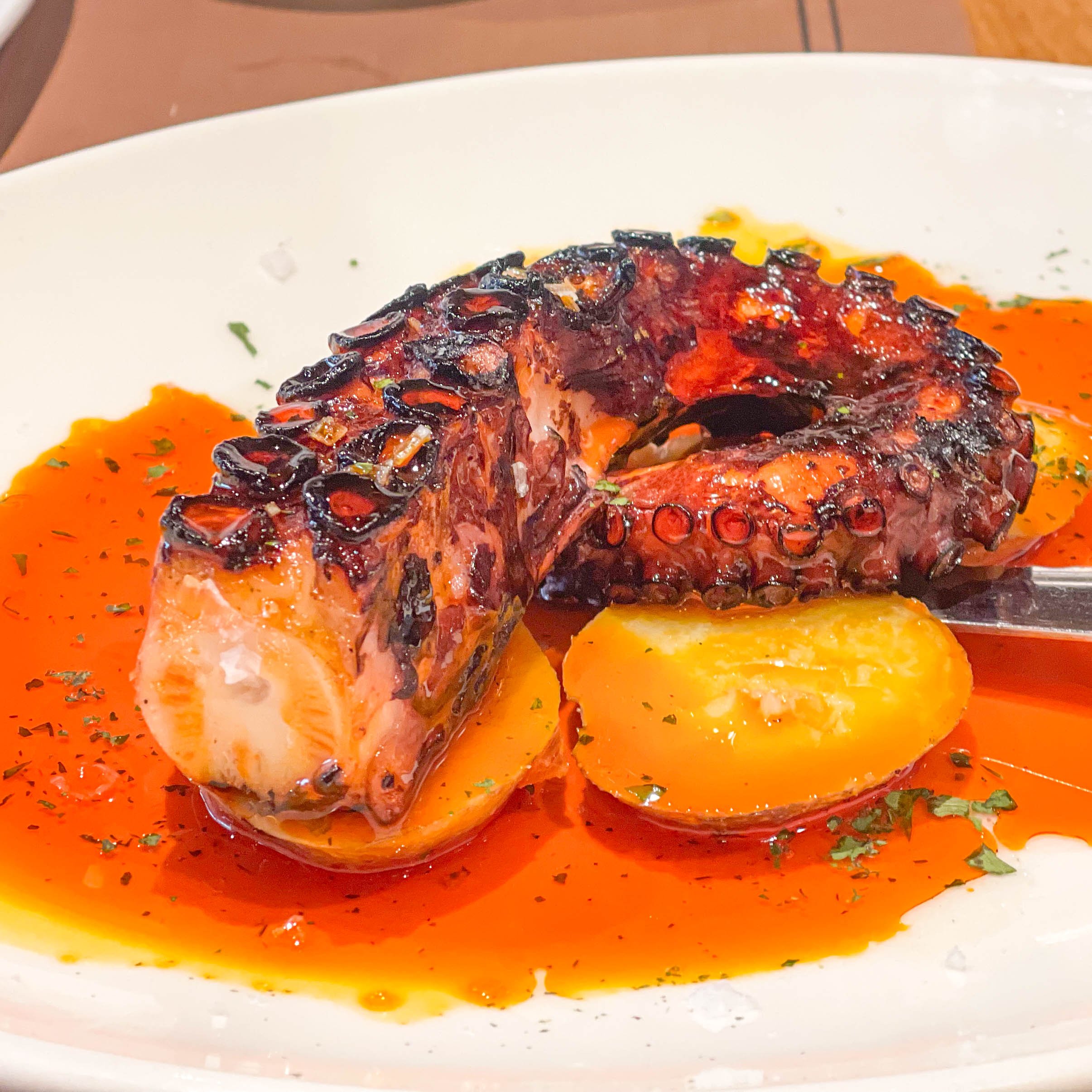
El Papatorio
El Papatorio is a restaurant known for its grilled meats and seafood - we enjoyed grilled octopus and steak with a side of crisp potatoes. The large menu features Spanish tapas like croquetas, padron peppers, jamon Iberico, Spanish omelets, and a huge selection of fresh local seafood.
Diners can choose to sit at the bar with a view of the open kitchen or to enjoy their meal in the dining room.
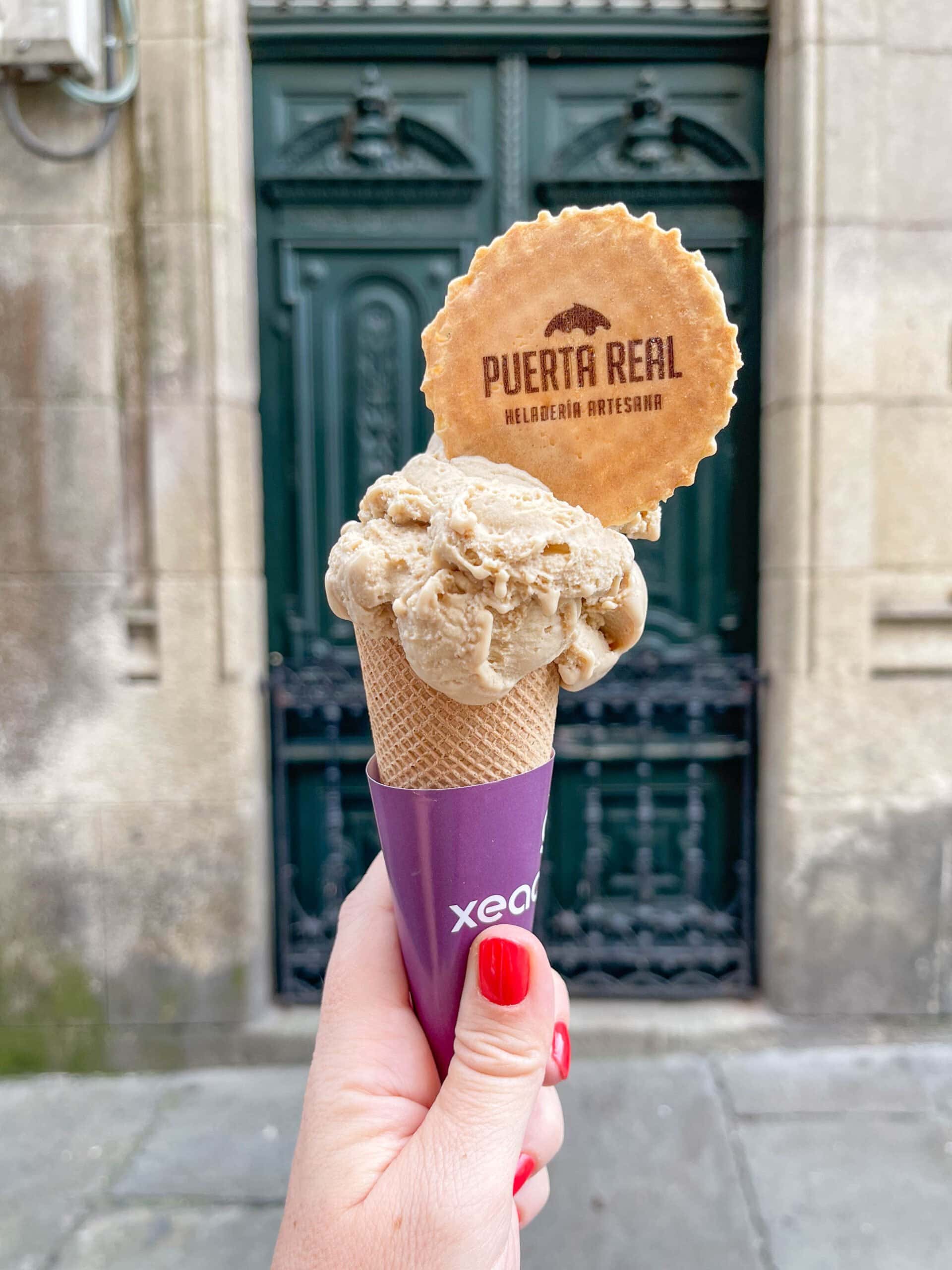
Heladería Puerta Real
An ice cream shop in the old town with flavors like Santiago almond cake, cherry yogurt, mascarpone fig, and dulce de leche.

Marie Miner
This restaurant has a large terrace with a casual atmosphere, plus a more formal restaurant inside with a menu focused on Galician cuisine, including croquetas, empanadas, risottos, and a wide selection of fish and shellfish. We stopped in for pre-dinner drinks.
Abastos 2.0
This restaurant that occupies six stalls of the Mercado de Abastos is known for being one of the best in town. A few dining experiences are offered. At the Barrra, diners gather at a single table and, for €50, are served items based on their preferences. The menu features modern tapas and wine and changes daily.
Visit the Terraza to enjoy tapas at tables outside without a reservation. Or, for groups of at least 6 people, reservations at tables are available.
Read More About Northern Spain:
Things to do in Santander
Casa Beatnik, a Charming Boutique Hotel in Galicia
Santillana del Mar
Northern Spanish Foods to Try
Santander Restaurants